---
# HBOT for Complex Wounds: What Makes It So Effective?
**URL:** https://mdhyperbaric.com/blog/hbot-for-complex-wounds
Date: 2026-03-16
Author: Jeff Lentz
Post Type: post
Summary: Hyperbaric oxygen therapy (HBOT) is widely used in medical wound care because it directly targets that oxygen limitation. In a hyperbaric chamber, patients breathe 100% oxygen in a pressurized environment. The increased pressure helps the blood carry more oxygen, especially to injured tissues, and can support immune function that helps protect against infection.
Categories: Blog
Featured Image: https://mdhyperbaric.com/wp-content/uploads/2026/03/Untitled-design-3.jpg
---
**Reviewed by: Elizabeth Chan, NP (Medical Director, MD Hyperbaric)
**
Complex wounds are not simply “slow to heal.” They often stall because the body cannot deliver enough oxygen to the tissue to complete the repair process. That oxygen deficit can come from compromised circulation, persistent swelling, diabetes-related microvascular changes, prior radiation therapy, infection, or surgical trauma that disrupts local blood supply. When oxygen cannot reliably reach the wound bed, the body struggles to build healthy tissue, control bacterial burden, and progress through normal healing phases.
Hyperbaric oxygen therapy (HBOT) is widely used in **[medical wound care](https://mdhyperbaric.com/conditions/recovery-from-surgery) **because it directly targets that oxygen limitation. In a hyperbaric chamber, patients breathe 100% oxygen in a pressurized environment. The increased pressure helps the blood carry more oxygen, especially to injured tissues, and can support immune function that helps protect against infection.
## Why oxygen determines whether a wound progresses
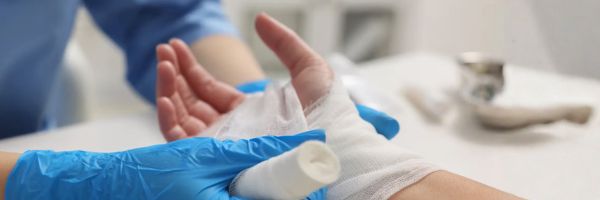
[**Wound healing**](https://mdhyperbaric.com/conditions/recovery-from-surgery) generally moves through three phases: inflammation, proliferation, and remodeling. These phases are not just a timeline on a chart. They are a series of biological “jobs” the body has to complete, including clearing damaged tissue, building a collagen scaffold, growing new blood vessels, closing the skin barrier, and strengthening repaired tissue over time.
Oxygen is central to all of those jobs. When tissues are oxygen-deprived, healing can stall in ways that look familiar to anyone living with a persistent wound:
- Collagen deposition weakens, so new tissue lacks strength.
- New capillary growth slows, so circulation does not improve.
- Immune cells are less effective at controlling bacteria.
- The wound can remain stuck in an inflammatory loop rather than moving into true repair.
This is why “oxygen optimization” is not a buzzword in wound care. It is often the difference between a wound that continues to plateau and a wound that begins to close.
### What HBOT is, in plain terms
HBOT is a medical treatment delivered in a specialized, pressurized chamber. Under typical conditions, the [**air contains about 21% oxygen**.](https://pmc.ncbi.nlm.nih.gov/articles/PMC8672270/) In HBOT, the patient breathes 100% pure oxygen at higher-than-normal atmospheric pressure, increasing the amount of oxygen dissolved in blood plasma and improving delivery throughout the body.
HBOT sessions typically last about 60-90 minutes, during which time you’ll relax in a comfortable, cutting-edge hyperbaric chamber while breathing pure oxygen. The chamber is pressurized to allow your lungs to take in more oxygen than they would at normal air pressure. This extra oxygen is then carried by your bloodstream to the areas of your body that need it most, including your surgical wounds. The number of sessions required will depend on your specific condition and recovery goals, which our team at MD Hyperbaric will discuss with you to ensure optimal results that get you back to feeling like yourself as soon as possible. Treatment plans often involve multiple sessions depending on the wound type and goals.
## The three big mechanisms behind HBOT for wounds
**1) Boosting tissue oxygenation beyond normal limits**
Some wounds simply do not have enough functioning microcirculation to deliver oxygen efficiently under normal conditions. Swelling compresses capillaries. Diabetes damages small vessels. Radiation can reduce tissue elasticity and blood flow. In HBOT, the increased pressure helps oxygen move through the body more effectively, particularly toward injured tissues.
That extra oxygen supports the cellular energy demands of healing. Cells can do more repair work when they are not operating in an oxygen deficit.
### **2) Supporting angiogenesis (new blood vessel growth)**
One reason complex wounds can be so stubborn is poor circulation. Long-term healing requires a rebuilt “supply chain” of blood flow to the affected area. Hospital-based wound programs commonly describe HBOT as helping stimulate new blood vessel growth, which is a practical way of describing angiogenesis.
New capillary growth improves oxygen and nutrient delivery, which supports healthier granulation tissue, stronger collagen formation, and better long-term wound stability.
### **3) Strengthening infection defense**
Infection risk is often the difference between steady improvement and major setbacks. Oxygen availability influences immune function. Cleveland Clinic describes HBOT as helping white blood cells protect the body from infection.
This matters for deeper wounds, wounds with tissue breakdown, or wounds that have already been challenged by repeated inflammation. Supporting immune defense does not replace good wound care practices, but it helps create a more favorable healing environment.
## Which wounds are commonly considered “complex”
Complex wounds can include:
- [**Non-healing surgical wounds **](https://www.hopkinsmedicine.org/health/treatment-tests-and-therapies/hyperbaric-oxygen-therapy)that are slow to close or reopen
- **Diabetic foot ulcers** and wounds affected by arterial or venous insufficiency
- **Traumatic wounds** where tissue was crushed or deprived of blood flow
- **Compromised grafts or flaps** where tissue viability is at risk
- **Radiation-damaged tissue** that heals poorly due to reduced blood supply
Clinical guidance and accepted indications for HBOT are commonly aligned with standards from the Undersea and Hyperbaric Medical Society (UHMS), which emphasizes physician supervision and facility standards for safe, clinically appropriate treatment.
## How HBOT fits into a full wound care plan
HBOT is most effective when it is not treated as a standalone fix. Strong wound care typically includes:
- Debridement when clinically appropriate
- Infection control and bacterial management
- Offloading or pressure relief for ulcers and pressure injuries
- Circulation evaluation and vascular support when needed
- Nutrition optimization and glucose management for metabolic wounds
Wound care organizations and hospital programs frequently describe HBOT as an adjunctive therapy used alongside standard wound care, not as a replacement for it.
When the basics are handled well and oxygen delivery is improved, wounds often have a better chance to move out of the stalled phase and into active repair.
## Surgical wound delays and what patients can do
Many surgical wounds heal within expected windows, but some take longer depending on the procedure type, patient age, health history, circulation, and whether complications arise. Surgical incisions can close within days or weeks for some people, while others may face months of healing when wounds are larger or recovery is disrupted.
When a surgical wound is not progressing, it helps to focus on what the wound needs most:
- Ensure the wound is being cleaned and managed as directed
- Confirm that swelling, pressure, and mobility are not stressing the incision
- Address systemic factors like blood sugar, nutrition, and circulation
- Consider whether oxygen delivery is a limiting factor, especially if healing is plateauing
HBOT can be a valuable layer of support in that situation because it can reduce swelling, support immune response, and help stimulate new blood vessel growth, all of which are relevant to stubborn surgical wounds.
## Support Faster, Smoother Would Healing and Recovery After Surgery
A complex wound is not one-size-fits-all. The best outcomes come from matching the HBOT protocol to the wound type, risk profile, and healing timeline, then integrating it with an overall wound care plan.Surgery is often just the first step. The real work begins during recovery, when your body needs time, oxygen, and the right support to heal properly. If you are concerned about prolonged downtime, swelling, or slow incision healing after an upcoming procedure, hyperbaric oxygen therapy can play a meaningful role in strengthening your recovery plan.
At MD Hyperbaric, we provide physician-guided HBOT protocols designed to enhance tissue oxygenation, reduce inflammation, and support efficient wound healing. By improving how oxygen is delivered to surgical sites, we help create an environment where your body can repair itself more effectively and with fewer setbacks.
Recovery does not have to feel uncertain or prolonged. With the right support in place, you can move through the healing process with greater confidence and return to daily life sooner. Contact MD Hyperbaric to schedule a consultation and learn how hyperbaric oxygen therapy can be integrated into your post-surgical recovery plan.

#### Reviewed by Elizabeth Chan, NP (Medical Director, MD Hyperbaric)
Elizabeth Chan, NP, serves as Medical Director at MD Hyperbaric and reviews educational content for clinical accuracy, patient safety, and clarity. She supports evidence-informed care planning for people exploring hyperbaric oxygen therapy for recovery, neurological symptoms, and wellness goals.
*Disclaimer: This article is for informational purposes only and does not constitute medical or insurance advice. Please consult a qualified healthcare provider for personal recommendations and check with your insurance company for current policy details.*
---
## Categories
- Blog
---
## Navigation
- [MD Hyperbaric](https://mdhyperbaric.com/)
---
## Footer Links
- [SKT Doctor](https://www.sktthemes.org/shop/free-medical-clinic-wordpress-theme/)