
Slow-healing wounds and lengthy recoveries can be deeply frustrating, holding you back from feeling like yourself and delaying your return to the life you love. Maybe you’ve tried conventional treatments and still find yourself waiting, hoping for better results. Fortunately, advancements in medical science have made it possible to actively support and accelerate your body’s repair process.
Hyperbaric oxygen therapy (HBOT) harnesses the healing potential of oxygen and modern technology to help wounds recover faster. For many, it’s a game-changer in the journey toward lasting healing and renewed well-being.
What Is Hyperbaric Oxygen Therapy?
Hyperbaric oxygen therapy is a medical treatment that involves a patient breathing in pure oxygen inside a specially designed, pressurized chamber. While the air we typically breathe only contains about 21% oxygen, HBOT delivers 100% oxygen, which is nearly five times higher than normal atmospheric pressure.
HBOT is a carefully monitored therapy that harnesses a natural element to enhance the body’s innate healing abilities. This treatment is noninvasive and medical-grade, and trained clinicians supervise the therapy. The goal is to create an environment that optimizes and accelerates healing.
How Does a Hyperbaric Chamber Heal Wounds?
The science behind healing with hyperbaric oxygen therapy is fascinating and well-established. A specialty HBOT chamber delivers increased oxygen levels to promote faster healing, promote new blood vessel growth, and enhance immune responses. Here’s a closer look at how this hyperbaric chambers promotes healing:
- Hyperoxygenation: During a therapy session, the pressurized chamber environment allows your lungs and bloodstream to absorb more oxygen than is possible under normal conditions. This process means that every cell in your body, including those at a wound or surgical site, receives a flood of oxygen, which is critical because oxygen is fundamental for cellular repair and generation.
- New blood vessel growth: When the blood supply for injured tissue is compromised, recovery slows. To combat this, HBOT stimulates the growth of new capillaries and small blood vessels in a process called angiogenesis. By improving blood flow, the body can deliver oxygen and nutrients more efficiently to the wound, giving the body exactly what it needs to rebuild.
- Reduced inflammation and swelling: HBOT can also reduce inflammation and swelling. Under pressure, blood vessels constrict, which reduces excess fluid and minimizes swelling at the injury site. This treatment can make you more comfortable while creating a more favorable environment for healing.
- Enhanced immune response: This treatment also boosts the immune system. High oxygen levels help white blood cells kill bacteria more effectively and enhance your body’s defense mechanisms. The result is a lower risk of infection, which is a crucial factor in healing, especially for wounds that are deep, large, or at risk of complications.
What Wounds Benefit From Oxygen Therapy?
HBOT is becoming increasingly popular for treating a variety of wounds. Whether you’re recovering from surgery, managing a chronic wound, or dealing with tissue changes following cancer treatment, HBOT offers unique support for your body’s repair process.
Post-Surgery Hyperbaric Oxygen Therapy
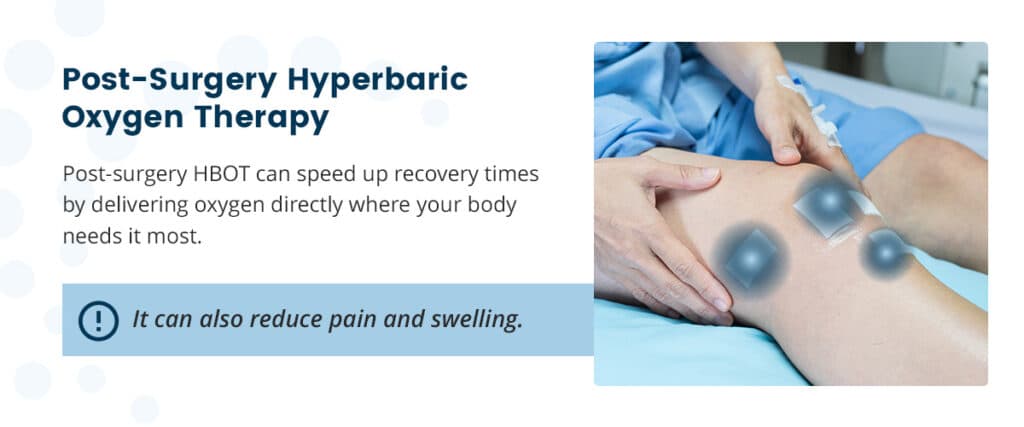
HBOT can speed up surgery recovery. If you’ve recently had a general procedure, plastic surgery, or orthopedic treatment, you can use HBOT to promote a smooth recovery. Post-surgery HBOT can speed up recovery times by delivering oxygen directly where your body needs it most. It can also reduce pain and swelling at the treatment site to help you feel more comfortable.
If aesthetics are a concern, you can rely on HBOT to help minimize scarring by supporting healthy tissue formation. Ultimately, post-surgery HBOT can get you back to daily life sooner by reducing downtime.
Oxygen Treatment for Wounds, Chronic and Non-Healing
Some wounds don’t heal as you or your provider expects. Chronic wounds, such as diabetic foot ulcers, pressure sores, and venous ulcers, often stall despite conventional treatments. HBOT helps deliver relief in many of these cases. By flooding the wound environment with oxygen-rich blood, this treatment helps you overcome healing plateaus, even when other therapies have been less effective or failed.
Hyperbaric Chamber for Healing Wounds From Radiation
Although radiation therapy can be lifesaving, it can cause late effects such as soft tissue radionecrosis, where tissues become damaged due to poor blood flow after treatment. HBOT has been shown to help these wounds and injuries by restoring tissue health and improving the quality of life for cancer survivors. One study found that as many as one-third of patients who receive HBOT are being treated for the late effects of radiation therapy.
What to Expect From Wound Healing With Oxygen Therapy
Stepping into the hyperbaric center for the first time can seem daunting, but the process is designed to maximize your comfort every step of the way. Here’s what you need to know about HBOT:
- The consultation: your journey will begin with a comprehensive clinical assessment. Trained clinicians will review your medical history and any underlying conditions to ensure HBOT is the right choice for you. This phase ensures your treatment is tailored, safe, and effective for your unique situation.
- The hyperbaric session: After creating your treatment plan, you will enter the hyperbaric chamber. Inside the private chamber, you will remain fully clothed, and you can relax, take a nap, or do another peaceful activity to pass the time. As the chamber gently pressurizes, you may feel pressure in your ears, similar to the sensation you experience when taking off in an airplane. This experience is normal and passes quickly.
- Session duration and frequency: Most sessions last between 60 and 90 minutes. Many people will need multiple sessions to maximize benefits. Throughout, a trained technician will monitor your safety and comfort to ensure a smooth and supportive experience.
Oxygen Healing Safety and Potential Risks to Know
Although hyperbaric chamber benefits for wound healing can deliver lasting relief, there are some potential risks to note. HBOT is generally safe when a trained professional oversees the treatment. However, you may experience some common, minor side effects. For example, ear pressure and temporary changes in vision can occur.
These side effects are often manageable and reversible. Severe complications are rare, and your care team will take every possible precaution to ensure your well-being throughout the process. At every stage, your clinical team is there to answer questions and support your recovery.
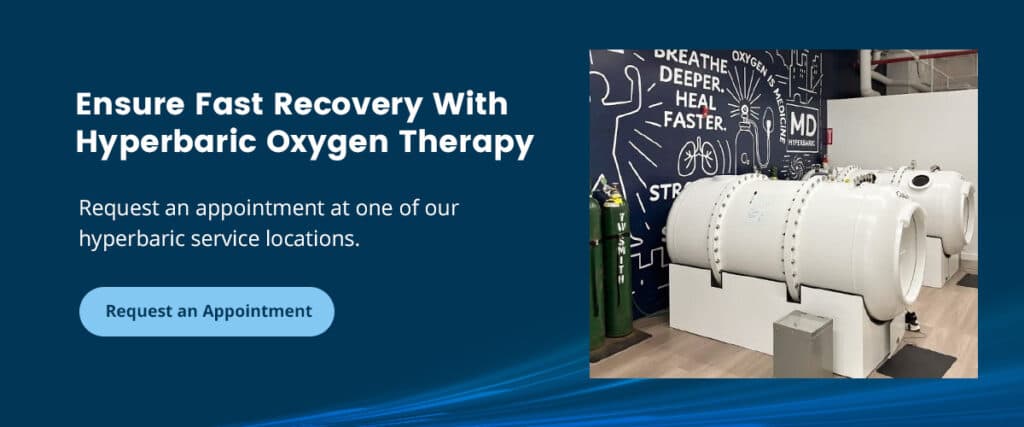
Ensure Fast Recovery With Hyperbaric Oxygen Therapy
Injuries, surgeries, and stubborn wounds can take a toll on your life. Thankfully, HBOT offers an effective way to accelerate and support healing. This therapy provides a significant boost to your body’s natural ability to heal, and MD Hyperbaric is the trusted expert to facilitate this treatment.
Partner with MD Hyperbaric for your healing journey. With a clinician-led, patient-centered approach and state-of-the-art hyperbaric chambers, you’ll receive the expert care and guidance you deserve, from first consultation to final recovery.
Ready to learn if HBOT is right for you? Request an appointment at one of our hyperbaric centers to discuss your personalized treatment plan.
Still Have Questions?
Questions About HBOT? Let's Chat
Book your free 15-minute discovery call today.
What Our Patients Say
Real Patients. Real Results
 Post-Surgical Recovery
“Getting HBOT helped me a lot with my wound healing. I noticed my scars remarkably lightened. My mood and energy levels improved as well in just three weeks of getting two sessions each week — despite my demanding work schedule, I felt like I had more energy.”Namae
 Inflammatory Bowel Disease
“I was prescribed HBOT by my specialist to treat a complex and traumatic issue stemming from IBD and reconstructive GI surgeries. I did a full course and absolutely saw improvement right away. The staff are amazing, very professional and caring.”Kathleen
 Injury Recovery
“I broke my wrist playing tennis and came to MD Hyperbaric Westchester to help speed up my recovery. After a few sessions I have felt a tremendous improvement in energy, sleep — and my doctor says my wrist is healing remarkably well.”John
 Cancer Adjunct
“I'm a breast cancer survivor, and after radiation near my lungs, I thought this treatment might be useful. I can feel a difference in my breathing and cognition. I definitely recommend it if your body has gone through a traumatic experience.”Aziza
 Wellness
“I recently began using Hyperbaric Oxygen Therapy at MD Hyperbaric, and it's been one of the most unique and impactful wellness treatments I've explored. I was drawn in by the potential benefits for anxiety, fatigue, and overall cellular repair, but I didn't expect it to feel this restorative — and my skin is glowing too!”Olesia
MD Hyperbaric Is Rapidly Expanding
Find Your Nearest HBOT Center
Before Your First Visit
Frequently Asked Questions
Hyperbaric Oxygen Therapy (HBOT) is a proven treatment that enhances healing by flooding the body with oxygen. Used for over 100 years, it supports brain health, anti-aging, athletic recovery, and medical conditions by boosting oxygen in blood, tissues, and organs. Patients breathe 100% oxygen in a pressurized chamber, accelerating recovery and promoting cellular repair.
HBOT is FDA-approved for 14 conditions like burns, carbon monoxide poisoning, and non-healing wounds. Emerging research also supports its use for post-surgical recovery, brain injury, fatigue, inflammation, athletic recovery, and anti-aging. Our medical team will assess if HBOT is right for you.
Yes, HBOT is safe when properly supervised. At MD Hyperbaric, treatments are protocol-driven, medically overseen, and administered by certified staff. Our Medical Director and onsite Safety Director ensure every session is carefully monitored, and we continuously update our protocols based on the latest research to prioritize patient safety.
Typically, most treatment sessions are approximately 60 minutes, though some conditions may require up to 90 or 120 minutes. Pressurization and depressurization may add about 20 minutes to the appointment, so you should plan for about 90 minutes for your visit.
The number of sessions depends on the condition being treated. Some patients may benefit from a few sessions, while others may require a more extended treatment plan. A typical protocol will involve 10-40 daily sessions to build up oxygen in the cells. Our Medical Director will recommend a specific treatment plan to address your goals and needs.
Prior to treatment, please try to avoid alcohol or carbonated drinks. It is best to avoid smoking and other tobacco products during your treatment period, as they may interfere with the body's ability to transport oxygen. Otherwise, there are no restrictions for food or activity before or after your treatment. We encourage you to have healthy meals and stay hydrated.
Most patients find HBOT sessions relaxing. You will rest comfortably in a 7.5-foot-long steel chamber, breathing 100% pure oxygen through a mask. During pressurization and depressurization, you may feel pressure changes similar to airplane travel. A trained technician will monitor you throughout the session.
The term "dive" is used because the process simulates the experience of a deep-sea dive in a pressurized environment. Hyperbaric Oxygen Therapy has deep roots in diving as an important therapy for treating divers experiencing decompression sickness.
At MD Hyperbaric, we use the FDA-cleared OxyHealth Fortius420, a spacious hard-shell chamber delivering 100% medical-grade oxygen via mask. It operates up to 3.0 ATA, allows tailored pressures, supports air breaks, and includes three windows for comfort and safety.
At MD Hyperbaric, we use hard-shell chambers that deliver 100% medical-grade oxygen at higher pressures for superior therapeutic benefits. Soft-shell chambers operate at lower pressures without medical-grade oxygen, making them less effective for medical treatment.
Our team will assess your medical history and specific circumstances through an intake process. An initial evaluation with certified staff and the Medical Director will determine your eligibility for HBOT.
No referral is needed. Our Medical Director will review your intake forms and prescribe HBOT if appropriate. If you have a prescription from a provider, we will coordinate with them. For serious health conditions, we may recommend getting clearance from your physician.
Some MD Hyperbaric centers accept insurance for certain on-label conditions — the FDA-recognized indications for which HBOT is an established standard of care. Whether insurance applies depends on your diagnosis, your plan, and the center you visit, so please contact your local center to confirm. Where insurance does not apply, HBOT is a self-pay treatment: most FSA/HSA plans allow reimbursement, and we can provide a superbill and receipt to help you submit a claim.
It depends on how you pay. For insurance-covered treatment at participating centers, your cost depends on your plan's deductible, copay, and coinsurance — the center verifies your benefits and explains expected costs before treatment begins. For self-pay treatment, we offer a variety of pricing options designed to suit different medical and financial needs, including pay-as-you-go and package options at reduced rates when purchased upfront. Please contact us to discuss pricing and options. We accept cash, credit, or check.