
The Top 10 Conditions MD Hyperbaric Supports With Hyperbaric Oxygen Therapy (HBOT)
Hyperbaric Oxygen Therapy (HBOT) is becoming one of the most talked-about natural therapies for help with surgical recovery, wound-care support, brain-injury recovery, athletic performance, neuropathy comfort, long-COVID fatigue, and overall wellness. In this blog post we will review how HBOT supports the body’s natural healing processes across a variety of conditions.
At MD Hyperbaric, we see clients from all backgrounds. Athletes, post-operative clients, busy professionals, parents, older adults, and individuals navigating chronic symptoms use HBOT to help them function, feel, and recover better. While HBOT is FDA-cleared for select conditions, patients use it as part of an integrative recovery or wellness plan under the guidance of their doctor.
Below are the 10 core conditions MD Hyperbaric helps our patients with.
“Following a mild concussion from a car accident, I dealt with debilitating brain fog and constant fatigue that made it impossible for me to work or enjoy my usual activities. Simple tasks felt overwhelming. HBOT helped me regain mental clarity and sustained energy levels. The persistent headaches faded, and I was able to return to my demanding career and daily routine without the lingering symptoms that had been controlling my life.”
– MD Hyperbaric Patient
1. Post-Surgical Recovery
One of the most common reasons individuals explore HBOT is to support their body’s recovery and healing after surgery. Many people search for help with surgical recovery or swelling after cosmetic procedures like rhinoplasty, liposuction, BBL, breast augmentation, facelifts, body contouring, orthopedic surgeries, and general post-operative procedures. Patients have used HBOT as both a pre-surgery and post-surgery aid at the recommendation of their surgeon to support and speed up their healing and recovery process.
HBOT is also widely used for compromised grafts and flaps, and is FDA-cleared for certain wound-related conditions such as diabetic ulcers and delayed radiation injury. Patients recovering from non-healing wounds, diabetic wounds, surgical incisions, and pressure sores frequently describe HBOT as helping them feel more stable, energized, and supported during their healing journey.
2. Performance and Longevity
This proactive, elective category attracts individuals who are not necessarily recovering from an illness but rather they’re aiming to optimize how they feel, think, and perform. People who are heavily invested in their health and exploring athletic performance optimization, longevity protocols, anti-aging strategies, and mental clarity techniques frequently use HBOT after traditional treatment methods haven’t produced desired results.
Clients using HBOT for performance and longevity often describe improved energy, enhanced recovery after high-intensity training, better focus, and overall vitality. Those drawn to biohacking or anti-aging routines frequently incorporate hyperbaric oxygen therapy alongside saunas, cold therapy, IV nutrition, supplements, or sleep optimization tools.
3. Concussions & TBIs
Individuals exploring recovery support after a traumatic brain injury, concussion treatment options, or post-concussion syndrome often experience post-concussion symptoms such as fogginess, focus issues, head pressure, or sensory discomfort. While HBOT is not FDA-cleared for concussion or TBI specifically, clinical results have shown that it helps support cognitive clarity, mental stamina, and neurological wellness.
Patients recovering from stroke (CVA), anoxic or hypoxic brain injury, or acute brain trauma often seek out specialized centers like MD Hyperbaric due to the need for elevated clinical oversight and more precise care protocols. Patients frequently report that using HBOT to support concussion and brain injury recovery helps improve cognitive function, mood, focus, and overall comfort during the recovery process. Patients recovering from sports injuries, car accidents, falls, or other non-acute brain injuries often describe HBOT sessions as “mental resets.” HBOT supports mental clarity, focus, and their ability to handle daily cognitive demands. Many say the sessions help them feel more grounded, more awake, and more capable of sustaining concentration throughout the day.
HBOT isn’t necessarily a replacement for neurological care. However, it is a supportive therapy many individuals incorporate to help feel more like themselves as they recover. Families often notice improvements from their loved ones in daily engagement, communication, and awareness over time.
4. Athletic Recovery & Injuries
Athletes and active individuals frequently seek HBOT for sports injuries, muscle recovery, performance enhancement, or orthopedic support. Whether they’re recovering from ACL/MCL tears, rotator cuff injuries, fractures, sprains, strains, or tendonitis, many feel HBOT helps support muscle repair, inflammation reduction, and overall recovery capacity.
Individuals managing plantar fasciitis, sciatica, hip/knee pain, shoulder injuries, or spine-related discomfort often describe HBOT as helping them feel more mobile and resilient during their recovery. Because HBOT temporarily increases oxygen availability, many athletes say sessions help them bounce back faster from workouts, competitions, or training cycles.
MD Hyperbaric also works with patients undergoing PRP, stem cell, or regenerative treatments. Many regenerative specialists recommend HBOT to support tissue health, circulation, and recovery after injections or biologics.
Competitive athletes have specific needs, including accelerated recovery timelines and performance goals in between competitive schedules. Referrals frequently come from trainers, physical therapists, sports medicine
doctors, and orthopedic surgeons.
5. Long COVID
Long COVID represents one of the fastest-growing patient populations seeking HBOT. Individuals experiencing post-acute sequelae of COVID-19 (PASC) often struggle with chronic fatigue, breathlessness, neurological fog, poor stamina, and systemic inflammation.
Patients searching for support with long COVID have used HBOT to help boost energy, immune resilience, cognitive clarity, and overall functional capacity. Many clients describe HBOT sessions as helping them maintain more stable energy levels, breathe more comfortably, and feel more present in daily activities. It helps them resolve key symptoms that affect day-to-day life.
Because few conventional treatments exist for long COVID symptoms, patients pursue HBOT as part of a broader recovery strategy supported by their medical providers.
6. Autoimmune & Inflammatory Conditions
Patients navigating autoimmune and inflammatory conditions frequently look for integrative therapies that support their body’s natural healing processes. Individuals living with arthritis, Hashimoto’s, MGUS, digestive issues like Crohn’s Disease, ulcerative colitis, IBS, or leaky gut often explore HBOT. Why? Because of its potential role in supporting inflammation balance and overall cellular wellness when other treatments haven’t provided desired results.
People who use HBOT to help with chronic inflammation or autoimmune symptoms report improvements in daily comfort, digestion, energy, and clarity. Some individuals also come to MD Hyperbaric during periods of immune activation, flare cycles, or digestive distress to support their body’s resilience.
Because immune-mediated conditions share overlapping inflammatory pathways, MD Hyperbaric can streamline protocols to support a wide population seeking alternatives to immunosuppressive medications.
7. Neurological & Neurodegenerative Conditions
This includes patients managing progressive neurological concerns such as Parkinson’s, Alzheimer’s, dementia, and other degenerative conditions. Individuals seeking to improve cognitive clarity, nerve health, migraines, or tinnitus incorporate HBOT as part of a complementary wellness plan.
HBOT may support circulation, nerve comfort, cognitive energy, and overall brain health. Patients with diabetic neuropathy or peripheral neuropathy often report improvements in sensation, comfort, or mobility. Those experiencing chronic migraines, tinnitus, or sudden sensorineural hearing loss may seek HBOT to support oxygenation and neurological health.
Parents of children on the autism spectrum sometimes incorporate HBOT as part of broader neurodevelopmental support strategies. Veterans and first responders exploring PTSD support also commonly integrate oxygen therapy for its neurological healing effects.
Chronic neurological cases differ significantly from acute TBIs. They require ongoing management rather than short-term intervention, resulting in long-term patient relationships.
8. Lyme Disease
Lyme disease is notoriously difficult to manage and often requires a long-term, multi-layered strategy. Many individuals searching for support with chronic Lyme symptoms, including fatigue, inflammation, neurological discomfort, immune imbalance, and mobility challenges, have turned to HBOT because of its role in supporting tissue oxygenation and whole-body wellness.
Patients with tick-borne illnesses like Borrelia and Borreliosis often report that HBOT helps them maintain more consistent energy, reduce inflammatory flare-ups, and support clarity during difficult periods of chronic infection. Many also use HBOT alongside antibiotics, herbal protocols, detoxification programs, or functional medicine care.
9. Oncology
Individuals navigating cancer treatment and recovery frequently turn to HBOT to support recovery from radiation therapy, chemotherapy, or the side effects of cancer-related treatments. HBOT is FDA-cleared for delayed radiation injury, including osteoradionecrosis and soft-tissue radionecrosis, which makes it an important tool in oncological supportive care.
Patients recovering from chemotherapy often feel depleted, inflamed, or cognitively foggy. Many seek supportive therapies that may help them regain energy, strengthen resilience, and feel more comfortable in their body during and after treatment.
MD Hyperbaric often collaborates with oncologists to ensure safe, coordinated care with clear communication and measurable outcomes.
10. Chronic Pain & Fatigue
Chronic pain and fatigue are among the most complex and underserved health challenges. Patients experiencing environmental illness, mold toxicity, mitochondrial dysfunction, chronic fatigue syndrome (ME/CFS), CRPS, fibromyalgia, or severe systemic fatigue often look for ways to support cellular energy, reduce discomfort, and regain day-to-day functionality.
People using HBOT for chronic fatigue or whole-body recovery support frequently describe HBOT as helping them feel more grounded, more energetic, and more capable of handling daily tasks. Because these conditions often involve multi-system dysfunction, HBOT becomes one supportive piece of a broader recovery roadmap. This may also include detoxification, nutrition, environmental changes, and integrative care.
This category attracts patients who have exhausted conventional options and are looking for comprehensive, long-term strategies that address underlying systemic stress.
Ready to Explore How HBOT Can Help You?
Looking for treatment options for any of these 10 conditions beyond conventional rest and medication? If you’ve tried everything else, HBOT may be the solution you’ve been looking for.
Like any medical decision, it’s important to work with a knowledgeable provider who understands how to apply medical-grade HBOT safely and effectively based on your conditions. MD Hyperbaric incorporates evidence-based protocols, medical oversight, and a comprehensive intake screening to ensure HBOT is used appropriately and that you achieve your desired results.
Curious about whether HBOT is a good fit for you? Book a FREE Discovery Call to learn how HBOT may support your wellness or recovery goals.
Disclaimer: This article is for informational purposes only and does not constitute medical or insurance advice. Please consult a qualified healthcare provider for personal recommendations and check with your insurance company for current policy details.
Still Have Questions?
Questions About HBOT? Let's Chat
Book your free 15-minute discovery call today.
What Our Patients Say
Real Patients. Real Results
 Post-Surgical Recovery
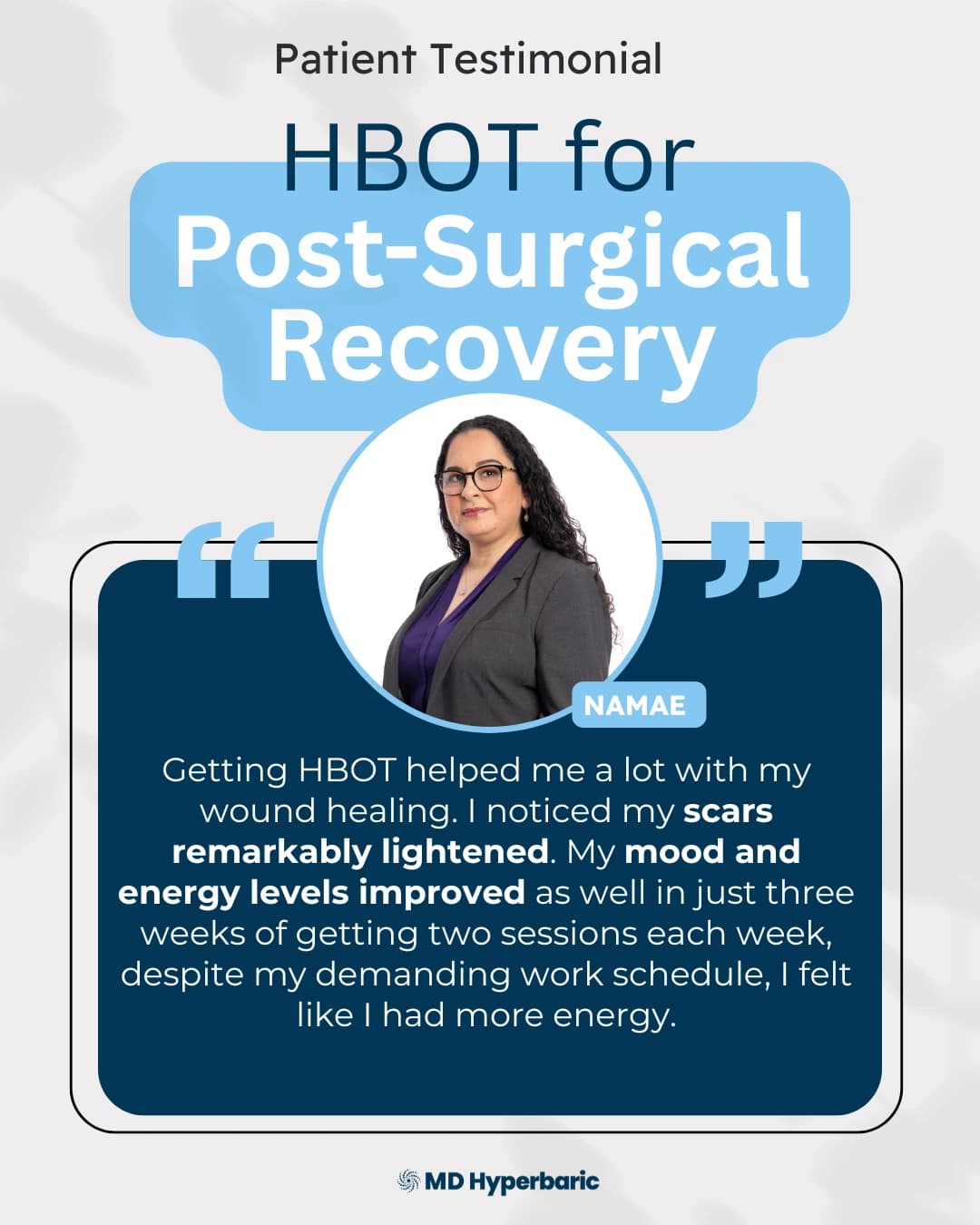
“Getting HBOT helped me a lot with my wound healing. I noticed my scars remarkably lightened. My mood and energy levels improved as well in just three weeks of getting two sessions each week — despite my demanding work schedule, I felt like I had more energy.”Namae
 Inflammatory Bowel Disease
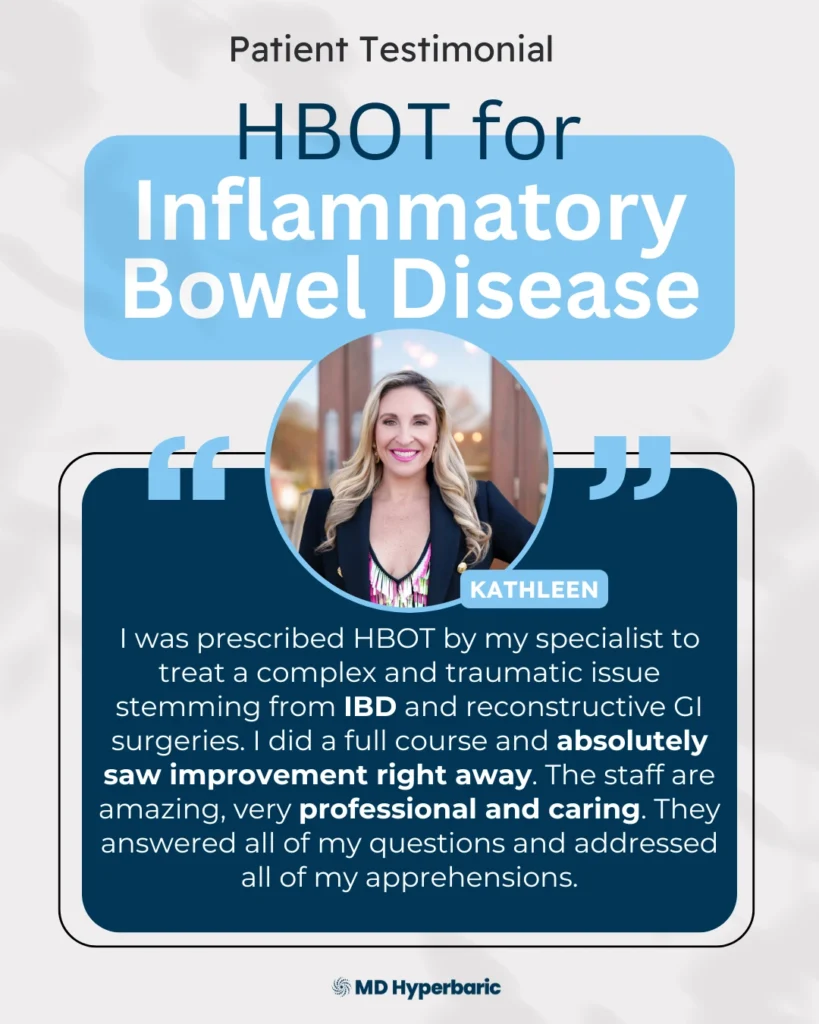
“I was prescribed HBOT by my specialist to treat a complex and traumatic issue stemming from IBD and reconstructive GI surgeries. I did a full course and absolutely saw improvement right away. The staff are amazing, very professional and caring.”Kathleen
 Injury Recovery
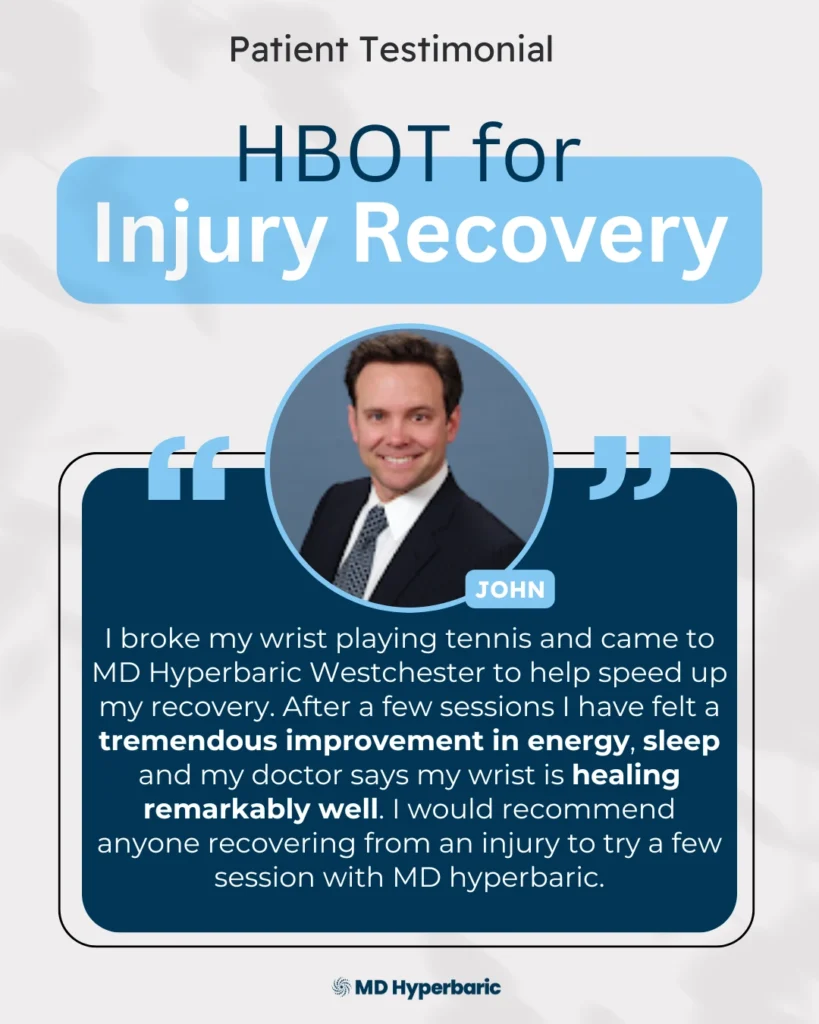
“I broke my wrist playing tennis and came to MD Hyperbaric Westchester to help speed up my recovery. After a few sessions I have felt a tremendous improvement in energy, sleep — and my doctor says my wrist is healing remarkably well.”John
 Cancer Adjunct
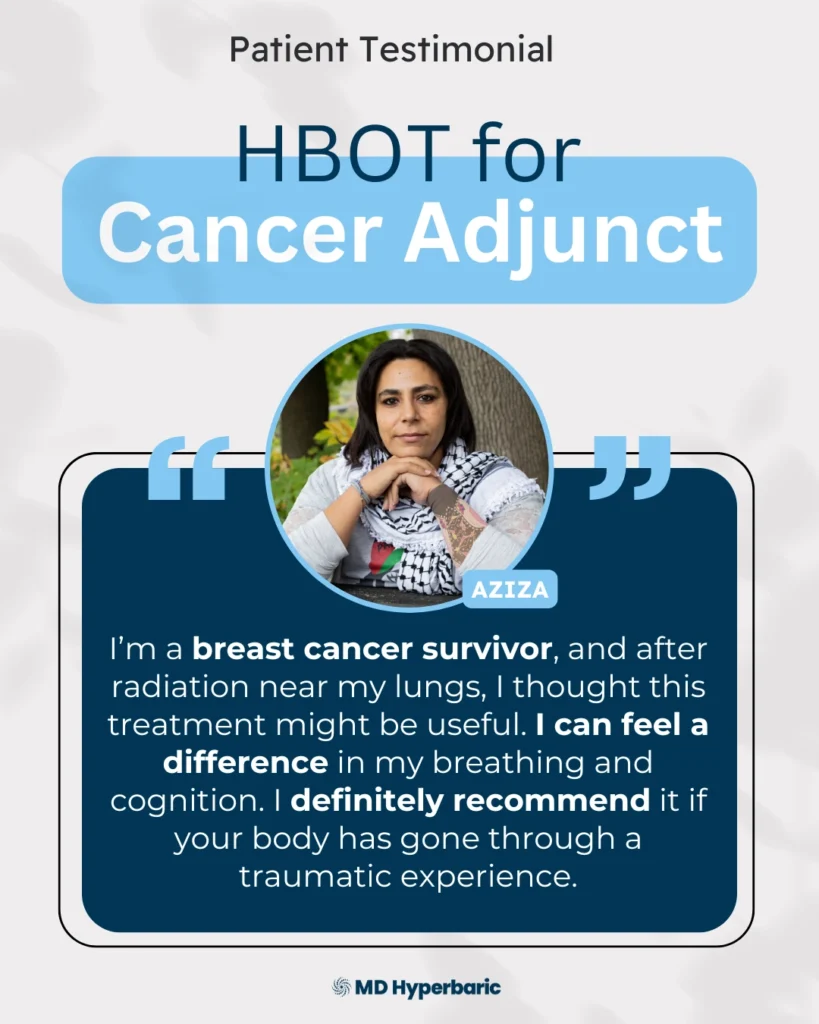
“I'm a breast cancer survivor, and after radiation near my lungs, I thought this treatment might be useful. I can feel a difference in my breathing and cognition. I definitely recommend it if your body has gone through a traumatic experience.”Aziza
 Wellness
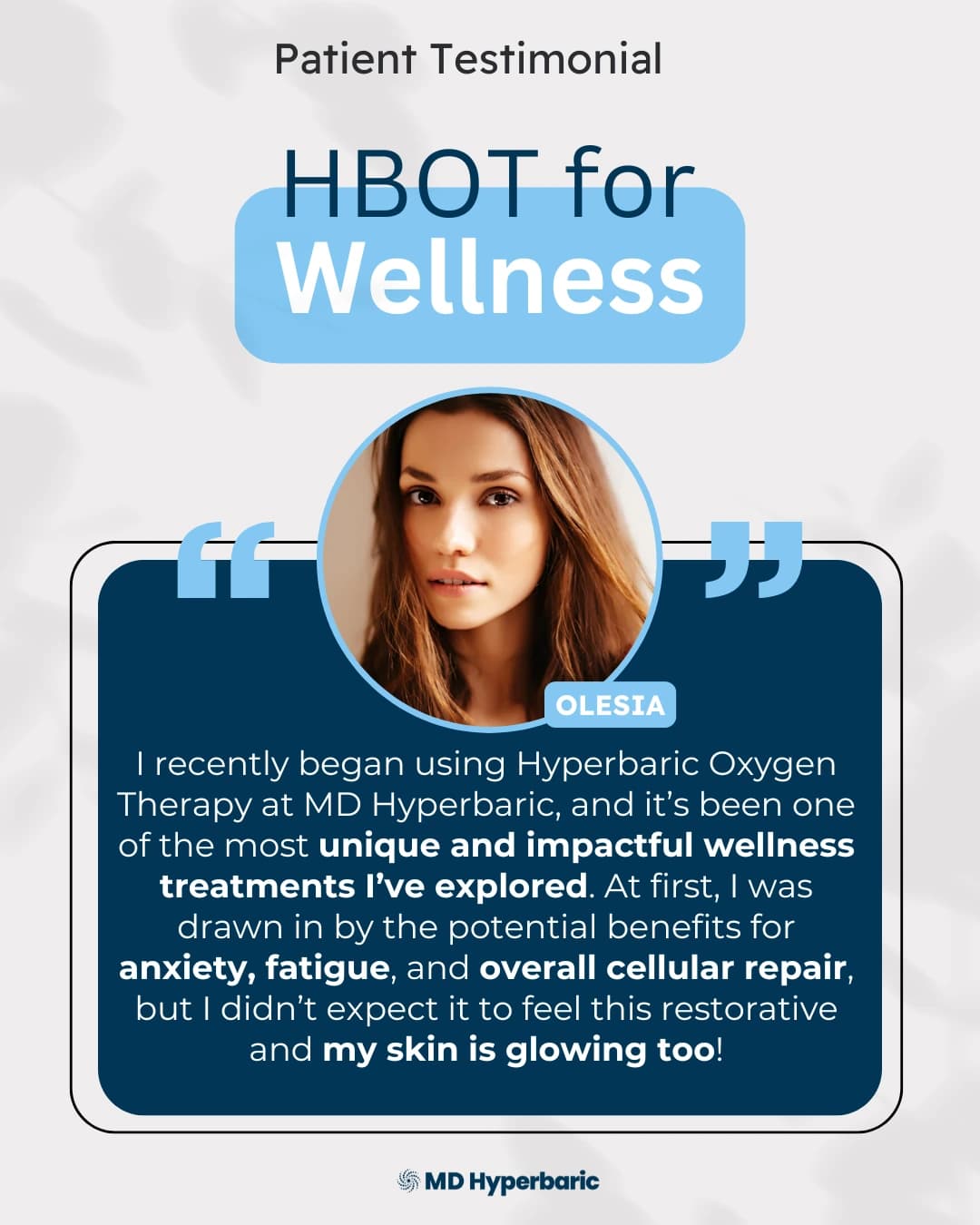
“I recently began using Hyperbaric Oxygen Therapy at MD Hyperbaric, and it's been one of the most unique and impactful wellness treatments I've explored. I was drawn in by the potential benefits for anxiety, fatigue, and overall cellular repair, but I didn't expect it to feel this restorative — and my skin is glowing too!”Olesia
MD Hyperbaric Is Rapidly Expanding
Find Your Nearest HBOT Center
Before Your First Visit
Frequently Asked Questions
Hyperbaric Oxygen Therapy (HBOT) is a proven treatment that enhances healing by flooding the body with oxygen. Used for over 100 years, it supports brain health, anti-aging, athletic recovery, and medical conditions by boosting oxygen in blood, tissues, and organs. Patients breathe 100% oxygen in a pressurized chamber, accelerating recovery and promoting cellular repair.
HBOT is FDA-approved for 14 conditions like burns, carbon monoxide poisoning, and non-healing wounds. Emerging research also supports its use for post-surgical recovery, brain injury, fatigue, inflammation, athletic recovery, and anti-aging. Our medical team will assess if HBOT is right for you.
Yes, HBOT is safe when properly supervised. At MD Hyperbaric, treatments are protocol-driven, medically overseen, and administered by certified staff. Our Medical Director and onsite Safety Director ensure every session is carefully monitored, and we continuously update our protocols based on the latest research to prioritize patient safety.
Typically, most treatment sessions are approximately 60 minutes, though some conditions may require up to 90 or 120 minutes. Pressurization and depressurization may add about 20 minutes to the appointment, so you should plan for about 90 minutes for your visit.
The number of sessions depends on the condition being treated. Some patients may benefit from a few sessions, while others may require a more extended treatment plan. A typical protocol will involve 10-40 daily sessions to build up oxygen in the cells. Our Medical Director will recommend a specific treatment plan to address your goals and needs.
Prior to treatment, please try to avoid alcohol or carbonated drinks. It is best to avoid smoking and other tobacco products during your treatment period, as they may interfere with the body's ability to transport oxygen. Otherwise, there are no restrictions for food or activity before or after your treatment. We encourage you to have healthy meals and stay hydrated.
Most patients find HBOT sessions relaxing. You will rest comfortably in a 7.5-foot-long steel chamber, breathing 100% pure oxygen through a mask. During pressurization and depressurization, you may feel pressure changes similar to airplane travel. A trained technician will monitor you throughout the session.
The term "dive" is used because the process simulates the experience of a deep-sea dive in a pressurized environment. Hyperbaric Oxygen Therapy has deep roots in diving as an important therapy for treating divers experiencing decompression sickness.
At MD Hyperbaric, we use the FDA-cleared OxyHealth Fortius420, a spacious hard-shell chamber delivering 100% medical-grade oxygen via mask. It operates up to 3.0 ATA, allows tailored pressures, supports air breaks, and includes three windows for comfort and safety.
At MD Hyperbaric, we use hard-shell chambers that deliver 100% medical-grade oxygen at higher pressures for superior therapeutic benefits. Soft-shell chambers operate at lower pressures without medical-grade oxygen, making them less effective for medical treatment.
Our team will assess your medical history and specific circumstances through an intake process. An initial evaluation with certified staff and the Medical Director will determine your eligibility for HBOT.
No referral is needed. Our Medical Director will review your intake forms and prescribe HBOT if appropriate. If you have a prescription from a provider, we will coordinate with them. For serious health conditions, we may recommend getting clearance from your physician.
Some MD Hyperbaric centers accept insurance for certain on-label conditions — the FDA-recognized indications for which HBOT is an established standard of care. Whether insurance applies depends on your diagnosis, your plan, and the center you visit, so please contact your local center to confirm. Where insurance does not apply, HBOT is a self-pay treatment: most FSA/HSA plans allow reimbursement, and we can provide a superbill and receipt to help you submit a claim.
It depends on how you pay. For insurance-covered treatment at participating centers, your cost depends on your plan's deductible, copay, and coinsurance — the center verifies your benefits and explains expected costs before treatment begins. For self-pay treatment, we offer a variety of pricing options designed to suit different medical and financial needs, including pay-as-you-go and package options at reduced rates when purchased upfront. Please contact us to discuss pricing and options. We accept cash, credit, or check.