

Condition support
Non-Healing Wounds
When a wound won't heal — a diabetic foot ulcer that has resisted weeks of care, or a skin graft or flap at risk of failing — the underlying problem is usually a lack of oxygen in the tissue. Hyperbaric oxygen therapy is an established, on-label treatment for these wounds, and participating MD Hyperbaric centers accept insurance, including Medicare, for qualifying cases.
WHY WOUND OXYGENATION MATTERS
Wounds Need Oxygen to Heal
Recent Surgery? Act Fast
If a skin graft or flap from a recent procedure is turning pale, dusky, or purple, or its edges are breaking down, the window to save it is narrow — HBOT started within 24–72 hours of the first signs of compromise gives markedly better results than delayed treatment. Contact your surgeon and our center immediately.
Diabetic Foot Ulcers
Diabetes damages both the nerves and the small blood vessels of the feet. A minor sore can become a deep, infected ulcer that standard wound care cannot close. HBOT is indicated for advanced ulcers (Wagner Grade 3 or higher — deep ulcers involving abscess, bone infection, or gangrene) that have not improved after at least 30 days of standard wound care, including debridement, offloading, infection control, and vascular optimization.
Compromised Skin Grafts and Flaps
After reconstructive surgery, trauma repair, or Mohs surgery for skin cancer, a graft or flap depends on fragile new blood supply. Warning signs of compromise include pallor, dusky or purple discoloration, poor capillary refill, blistering, edge breakdown, or areas of early tissue death. HBOT can salvage threatened grafts and flaps, and can also prepare a previously irradiated or otherwise compromised surgical site before reconstruction.
Other Selected Problem Wounds
Chronic wounds with documented tissue hypoxia — including arterial-insufficiency wounds — may also qualify. Our Medical Director evaluates each wound individually, alongside your existing wound-care team.
HOW HBOT HELPS
Restoring Oxygen to the Wound Bed
Wounds need oxygen to heal — to build new blood vessels, produce collagen, fight infection, and grow new skin.
Wounds need oxygen to heal — to build new blood vessels, produce collagen, fight infection, and grow new skin. In a hypoxic wound bed, all of that stalls. HBOT floods the blood plasma with dissolved oxygen, reaching tissue that damaged circulation cannot adequately supply:
- Re-oxygenates the wound bed — restoring the oxygen levels needed for healing cells to function
- Stimulates new blood vessel growth (angiogenesis) — building lasting circulation in the wound area
- Boosts infection control — white blood cells need oxygen to kill bacteria; HBOT restores that oxidative killing capacity
- Reduces swelling and ischemia-reperfusion injury in threatened grafts and flaps
- Supports collagen production and re-epithelialization — the structural work of wound closure
Re-Oxygenates the Wound Bed
Stimulates New Blood Vessel Growth
Boosts Infection Control
Reduces Swelling
Supports Collagen Production and Re-Epithelialization
Who can benefit?
Patients With Wounds That May Qualify for HBOT
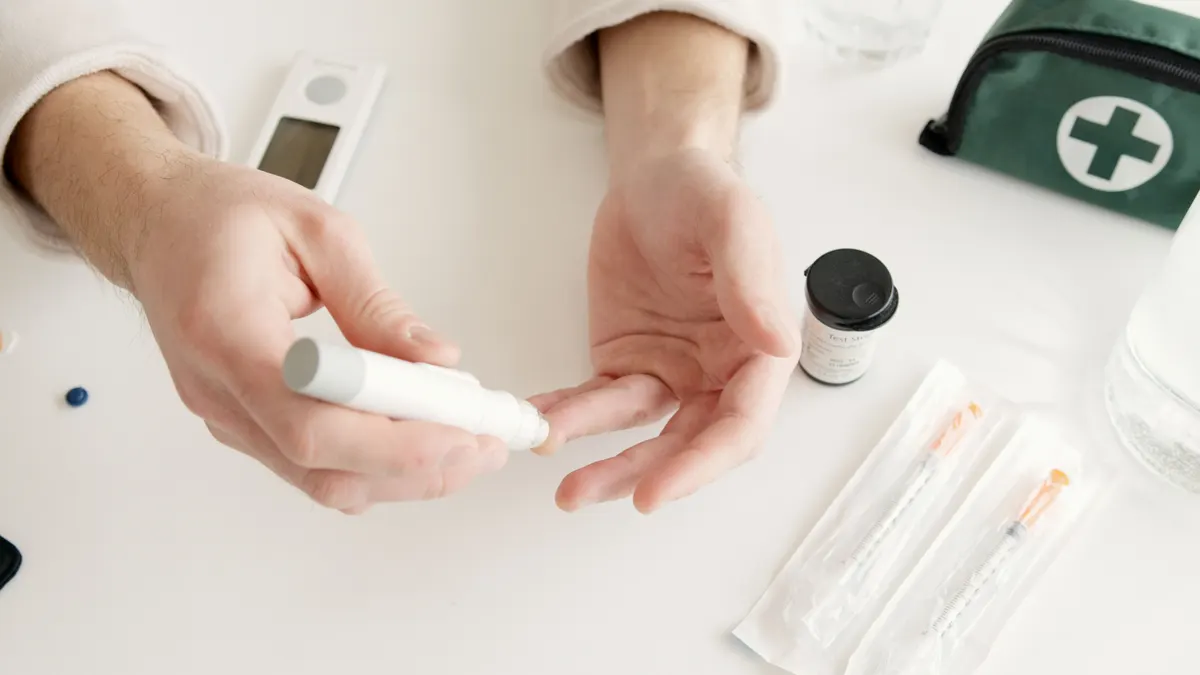
Patients With Advanced Diabetic Foot Ulcers
HBOT is indicated for advanced ulcers (Wagner Grade 3 or higher — deep ulcers involving abscess, bone infection, or gangrene) that have not improved after at least 30 days of standard wound care, including debridement, offloading, infection control, and vascular optimization.
Read study (opens in a new tab)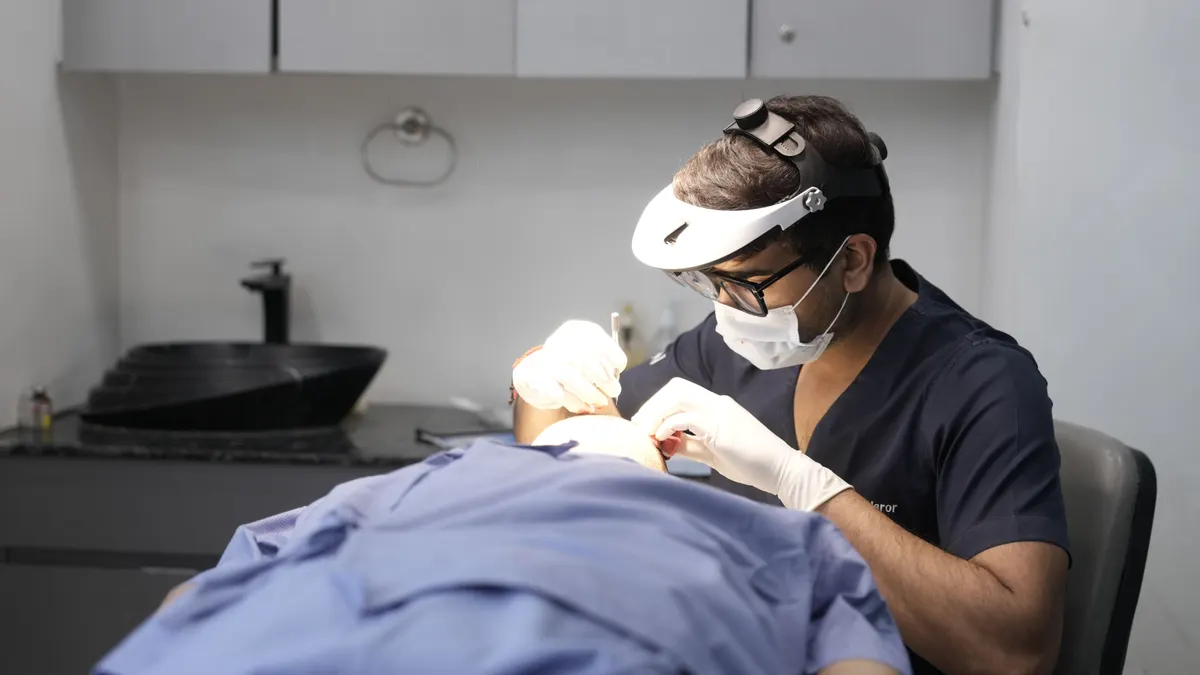
Patients With Compromised Skin Grafts and Flaps
HBOT can salvage threatened grafts and flaps, and can also prepare a previously irradiated or otherwise compromised surgical site before reconstruction.
Read study (opens in a new tab)
Patients With Other Selected Problem Wounds
Chronic wounds with documented tissue hypoxia — including arterial-insufficiency wounds — may also qualify. Our Medical Director evaluates each wound individually, alongside your existing wound-care team.
Read study (opens in a new tab)
Patients Preparing a Compromised Site for Reconstruction
HBOT can also prepare a previously irradiated or otherwise compromised surgical site before reconstruction.
Read study (opens in a new tab)Your Next Step
Ready to Discuss a Non-Healing Wound?
Call to verify your coverage.
How We're Different
Why Choose MD Hyperbaric?
Here's why thousands of patients trust MD Hyperbaric to accelerate their recovery:
Patient Centered Care
We tailor your treatment to your needs and guide you through every step—so you feel informed, supported, and on track to recover faster.
The Most Advanced Chambers
We use the largest and safest FDA-cleared, hyperbaric chambers on the market, for comfort, results and peace of mind.
Expert Medical Oversight
Every treatment is overseen by licensed medical providers and delivered by trained staff with specialized expertise in HBOT.
Uncompromising Safety Standards
Our team follows strict protocols to ensure every treatment is delivered in a safe, carefully controlled environment.
How It Works
A Coordinated Path to Treatment
We guide you through every step—from consultation to treatment—with expert support and personalized care, all backed by a proven, physician-led process to ensure your safety and results.
Free Discovery Call
Speak with our team to learn more about HBOT and whether it's a good fit for you (optional).
Intake & Review
Complete a simple health form for our medical team to review. They will follow up if anything needs clarification.
Personalized Plan
You'll receive a custom protocol designed for your recovery.
Start Your First Session
Enter our roomy FDA-cleared hyperbaric chamber at your local center and start treatment with expert guidance.
Monitor & Measure
Our team will monitor and evaluate your response to treatment to ensure safety and optimal outcomes are achieved.
What Our Patients Say
Real Patients. Real Results
 Post-Surgical Recovery
“Getting HBOT helped me a lot with my wound healing. I noticed my scars remarkably lightened. My mood and energy levels improved as well in just three weeks of getting two sessions each week — despite my demanding work schedule, I felt like I had more energy.”Namae
 Inflammatory Bowel Disease
“I was prescribed HBOT by my specialist to treat a complex and traumatic issue stemming from IBD and reconstructive GI surgeries. I did a full course and absolutely saw improvement right away. The staff are amazing, very professional and caring.”Kathleen
 Injury Recovery
“I broke my wrist playing tennis and came to MD Hyperbaric Westchester to help speed up my recovery. After a few sessions I have felt a tremendous improvement in energy, sleep — and my doctor says my wrist is healing remarkably well.”John
 Cancer Adjunct
“I'm a breast cancer survivor, and after radiation near my lungs, I thought this treatment might be useful. I can feel a difference in my breathing and cognition. I definitely recommend it if your body has gone through a traumatic experience.”Aziza
 Wellness
“I recently began using Hyperbaric Oxygen Therapy at MD Hyperbaric, and it's been one of the most unique and impactful wellness treatments I've explored. I was drawn in by the potential benefits for anxiety, fatigue, and overall cellular repair, but I didn't expect it to feel this restorative — and my skin is glowing too!”Olesia
Still Have Questions?
Questions About HBOT? Let's Chat
Book your free 15-minute discovery call today.
MD Hyperbaric Is Rapidly Expanding
Find Your Nearest HBOT Center
Clinical protocol
Typical Treatment Protocols
| Condition | Sessions | Frequency | Duration | Pressure | Reported Outcomes |
|---|---|---|---|---|---|
| Diabetic foot ulcer (Wagner Grade 3–4) | 30–40 | 5x/week | 90 mins | 2.0–2.4 ATA | Reduced major amputation rate; improved wound closure; limb salvage (Faglia 1996; Löndahl 2010) |
| Compromised graft/flap (acute, within 72h) | 10–20 | Twice daily days 1–3, then 5x/week | 90 mins | 2.0–2.4 ATA | Increased graft/flap survival; reduced partial necrosis (Friedman et al; UHMS) |
| Compromised graft/flap (delayed presentation) | 20–30 | 5x/week | 90 mins | 2.0–2.4 ATA | Improved healing; reduced revision surgery (Baynosa & Zamboni; UHMS) |
| Pre-operative site optimization (irradiated/compromised bed) | 20 before + 10 after | 5x/week | 90 mins | 2.0–2.4 ATA | Improved graft take in compromised recipient sites (Marx; UHMS) |
Your exact protocol is set by our Medical Director in coordination with your wound-care team or surgeon. Continuing beyond 30 sessions requires documented progress (shrinking wound, healthier tissue), which we track throughout your course.
Supporting Research
Research on HBOT for Non-Healing Wounds
Advanced diabetic foot ulcers (Wagner Grade 3 or higher after 30 days of standard wound care) and compromised skin grafts and flaps are FDA-recognized indications.
Adjunctive systemic hyperbaric oxygen therapy in treatment of severe prevalently ischemic diabetic foot ulcer: a randomized study
(opens in a new tab)Hyperbaric oxygen therapy facilitates healing of chronic foot ulcers in patients with diabetes
(opens in a new tab)Lack of effectiveness of hyperbaric oxygen therapy for the treatment of diabetic foot ulcer and the prevention of amputation: a cohort study
(opens in a new tab)Hyperbaric oxygen therapy does not reduce indications for amputation in patients with diabetes with nonhealing ulcers of the lower limb
(opens in a new tab)Systematic review of the effectiveness of hyperbaric oxygenation therapy in the management of chronic diabetic foot ulcers
(opens in a new tab)Transcutaneous oximetry in clinical practice: consensus statements from an expert panel based on evidence
(opens in a new tab)Chronic non-hematogenous osteomyelitis treated with adjuvant hyperbaric oxygen
(opens in a new tab)Chronic osteomyelitis of the tibia: treatment with hyperbaric oxygen and autogenous microsurgical muscle transplantation
(opens in a new tab)A clinical staging system for adult osteomyelitis
(opens in a new tab)An evidence-based appraisal of the use of hyperbaric oxygen on flaps and grafts
(opens in a new tab)Hyperbaric Oxygen Therapy for the Compromised Graft or Flap
(opens in a new tab)The effect of hyperbaric oxygen on compromised grafts and flaps
(opens in a new tab)Influence of adjuvant hyperbaric oxygen therapy on short-term complications during surgical reconstruction of upper and lower extremity war injuries
(opens in a new tab)CMS National Coverage Determination 20.29 — Hyperbaric Oxygen Therapy
(opens in a new tab)UHMS Indications Manual — Diabetic Foot Ulcer; Compromised Skin Grafts and Flaps
(opens in a new tab)Tenth European Consensus Conference on Hyperbaric Medicine: recommendations for accepted and non-accepted clinical indications
(opens in a new tab)Before Your First Visit
Frequently Asked Questions
The general criteria are a Wagner Grade 3 or higher ulcer (deep, with infection, bone involvement, or gangrene) that has not adequately healed after at least 30 days of good standard wound care. A transcutaneous oximetry (TCOM) test then confirms the wound area is oxygen-deprived and likely to respond. Contact us and we will review your situation with your wound-care provider.
Insurers generally expect a Wagner Grade 3 or higher ulcer documented by your wound-care provider, at least 30 days of standard wound care without adequate healing, documented blood-sugar management, a vascular evaluation with revascularization first where indicated, and transcutaneous oximetry (TCOM) showing low oxygen around the wound that improves under oxygen challenge. Our team helps assemble this documentation with your existing providers — it is usually already in your chart.
At participating MD Hyperbaric centers, yes — we are in-network providers and accept insurance, including Medicare, for qualifying diabetic foot ulcers, compromised skin grafts and flaps, and other selected problem wounds. Contact our center directly, or ask your podiatrist, wound-care specialist, or surgeon to send a referral. We verify your benefits before treatment begins. Coverage depends on your diagnosis, your plan, and medical-necessity criteria; most plans require prior authorization, which we coordinate with your physician and insurer using the wound documentation payers expect. Acute graft or flap cases are expedited because timing is critical. We will explain your expected costs before your first session.
Randomized studies of severe diabetic foot ulcers found that adjunctive HBOT reduced major amputation rates (Faglia et al, Diabetes Care 1996, PMID 8941460) and improved healing of chronic ulcers (Löndahl et al, Diabetes Care 2010, PMID 20427683). Careful patient selection matters: broader trials reported smaller or no effects (Margolis 2013, PMID 23423696; Fedorko 2016, PMID 26740639), which is why candidates are selected by wound grade and transcutaneous oximetry (Fife et al, PMID 19341127). For compromised grafts and flaps, clinical reviews and the UHMS Indications Manual support improved survival and reduced revision surgery when HBOT starts promptly (Friedman et al, PMID 16799386; Francis & Baynosa, PMID 28116225).
No — HBOT is an adjunct. You continue debridement, offloading, dressings, and infection management with your existing team while HBOT addresses the oxygen deficit that is holding healing back. Our Medical Director coordinates directly with your providers.
Immediately — call us the same day. Salvage results are markedly better when HBOT begins within 24–72 hours of the first signs of compromise, typically with twice-daily sessions for the first few days. We expedite evaluation and insurance authorization for these cases.